
Thank you for Subscribing to Environmental Business Review Weekly Brief

SLB
Todd Meaux, Head of HSE & Facilities Management
Advancing Safety Excellence through Human Performance
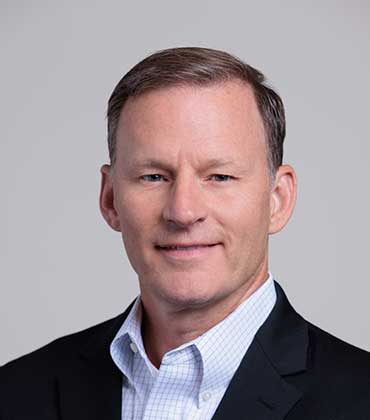
Todd Meaux
Todd Meaux is an experienced HSE and facilities leader with expertise in safety, environmental stewardship, operations and business transformation. At SLB, he oversees facilities and workforce operations, combining strategic leadership with health, safety and environmental compliance, risk assessments, incident investigations and facilities management across diverse operational environments.
A Career Built Beyond the Comfort Zone My career began in wellsite operations across offshore and land environments. I was exposed early to significant safety and environmental risks, including high-pressure and high-temperature wells, mechanical lifting, chemical hazards and remote worksites located hundreds of miles from civilization. Early in my career, I witnessed a severe incident involving a service provider who lost a leg due to a pipe rupture caused by an incorrect specification. That experience, along with many others, taught me the old adage: “safety rules are written in blood.” Working in the field meant taking on responsibility at a young age, with the company entrusting employees in their twenties to run high-risk, multi-million dollar businesses. After my field career, I held roles in operations management with profit-and-loss responsibility, global business development, sales and marketing, headquarters strategy, mergers and acquisitions and digital applications focused on safety and service quality. These roles brought me to work in multiple countries. I now lead Health, Safety and Environment and Facilities Management across the Houston Metro portfolio, covering approximately 10,000 colleagues across 34 sites at approximately six million square feet of office, manufacturing and warehouse space. My team and I focus on coaching and educating colleagues while conducting risk assessments and audits. We support business lines in maintaining health, safety and environmental compliance, investigate incidents and get into the hearts and minds of our high-risk manufacturing teams. On the facilities side, we manage budgets and preventive maintenance to keep operations running so colleagues can work uninterruptedly to produce the technologies that drive innovation. Looking back on my career, the company has always challenged me to adapt. My biggest achievement has been staying agile to accept, contribute and excel in those roles. My progression was not linear. Instead, it was more of a lattice than a conventional ladder, with a new role every two to three years that pushed me beyond my comfort zone. That journey included a secondment to Shell Oil Company in Scotland, where I managed a team despite remaining an SLB employee. It was an enriching experience you cannot prepare for. Later, in France, I moved into a sales & marketing position, then mergers & acquisitions without a marketing or finance background. Afterwards, a strategy position for a multi-billion-dollar division, where I evaluated companies globally to fill portfolio gaps for future growth; now, I’m in HSE & Facilities. Where Technology Meets Human Performance Digital technology plays an increasingly important role in safety performance. One example is AI-enabled CCTV safety systems in manufacturing operations. The technology provides a 24/7 “safety eye in the sky” by capturing video clips of unsafe acts, such as entering restricted zones or failing to wear required personal protective equipment. We use the technology for coaching, helping manufacturing teams identify safer approaches while strengthening engagement, trust and accountability. After reviewing unsafe acts, we often hear the response, “that’s how we’ve always done it.” Those discussions help teams work more safely. No matter what technology is deployed, AI or otherwise, it must work in unison with the human element. Technology is only as good as how we deploy, adopt and improve it. As we know, many safety procedures, protocols, rules and codes have been written in blood, but they are only as effective as the people who follow them. That is why a key shift for HSE leaders is moving beyond procedures, protocols and compliance requirements toward a deeper understanding of human performance. As individuals gain experience and become more competent, they often stop following procedures word for word. Shortcuts become normalized, complacency develops and experienced employees can become vulnerable after learning what they can get away with, creating blind spots over time. Moving HSE teams across sites with different risk profiles, including explosives, radiation and machining operations, broadens their experience and brings fresh eyes to risks that have become invisible to those who see them every day. Training, going to events and learning the rules and codes are important, but much of HSE is learned on the job. We remember bad events more than good ones, and exposure makes you more watchful and competent. When you see a similar risk again, you know it needs to be corrected before someone gets hurt. Creating the Next Generation of Safety Leadership A recent substantial initiative has been integrating HSE and Facilities Management into a single function. We combined them because people get hurt in facilities, and we saw a connection between the two functions. “We want everyone to go home to their family as good, if not better, than when they came to work that day.” In the Houston Metro, we restructured the function by dividing the portfolio into seven zones based on site proximity, risk profile and square footage. Each zone has a dedicated HSE and facilities team aligned with its risk profile and size, helping us coach the teams and strengthens safety across the portfolio. The structure has strengthened safety oversight and facilities management. Another career achievement has been learning how to get the best out of people and build strong teams. In our company, HSE is in our DNA. We start every meeting with an HSE moment. Current focus areas include preventing heat exhaustion and heat stroke through hydration, rest, listening to your body and knowing the signs. Although HSE has always been part of our culture, working in the function has helped me further improve it. Looking ahead, HSE leaders must prepare for rapid technological advances, while government regulations and codes continue to evolve. Applying AI to improve compliance with EPA, OSHA and company requirements can help reduce violations, incidents and injuries. Strengthening human factors to prevent serious injuries, alongside securing management support for safety investments, will remain critical priorities. We are all humans and fallible. Even a missed step can cause a twisted ankle, but awareness reduces risk. If we can stop you from bleeding, from getting an amputation and prevent a fatality, that’s what we’re focusing on. We want everyone to go home to their family as good, if not better, than when they came to work that day. My advice to emerging HSE leaders is simple. Safe operations are not a destination but a continuous journey. The work of an HSE professional is never done. As an HSE leader, you are a business partner who brings value, and strong HSE performance delivers ROI and a competitive advantage for the company. Line management owns safety; everyone is responsible for safe operations, but safety must start with you.The articles from these contributors are based on their personal expertise and viewpoints, and do not necessarily reflect the opinions of their employers or affiliated organizations.
